
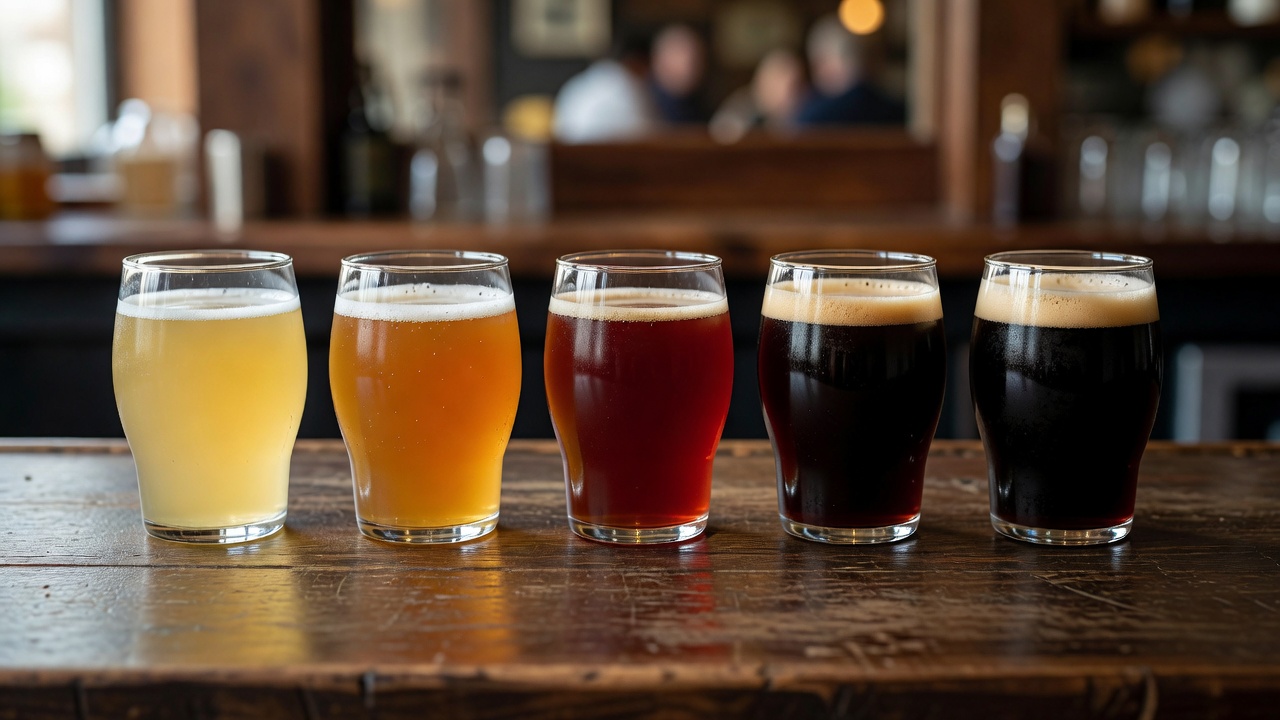
It all starts with yeast
Every beer is made from four core ingredients: malted grain (usually barley), hops, water and yeast. Of these, yeast decides the most fundamental division in the beer world — whether a beer is an ale or a lager.
- Ales use Saccharomyces cerevisiae, often called "top-fermenting" yeast. It works at warmer temperatures (roughly 15–24°C) and tends to produce fruity, spicy flavour compounds called esters.
- Lagers use Saccharomyces pastorianus, a "bottom-fermenting" yeast that works at cooler temperatures (roughly 7–13°C). The beer is then conditioned cold for weeks — the German word lagern means "to store". The result is a cleaner, crisper flavour.
Colour and strength have nothing to do with the distinction. There are pitch-black lagers and pale golden ales.
Lager: from Plzeň to the world
Dark lagers were brewed in Bavaria for centuries, but the golden lager most of the world drinks today began in 1842 in Plzeň (Pilsen), in what is now the Czech Republic. Bavarian brewer Josef Groll combined pale malt, soft local water and Saaz hops to create the first Pilsner — the beer now sold as Pilsner Urquell and celebrated each year at Pilsner Fest. Its clear golden colour, showcased by newly affordable glassware, made it a sensation.
Lager styles to know
- Pilsner — crisp, golden, with a distinct floral or spicy hop bitterness.
- Helles — Munich's softer, maltier answer to Pilsner.
- Oktoberfestbier — a golden, slightly stronger festival lager served by the litre at Oktoberfest.
- Dunkel — a dark Munich lager with bread-crust and caramel flavours.
- Bock — a strong German lager, often 6–7% ABV, with seasonal variants such as Maibock and the even richer doppelbock of Munich's Starkbierfest.
Ale: Britain's tradition
Before refrigeration, warm-fermenting ales dominated Britain and Ireland. The family includes bitter, mild, golden ale, brown ale and barley wine — all well represented at the Great British Beer Festival. Many are served on cask — see our guide to cask ale for how that works.
Belgian ales
Belgium has some of the most diverse ale traditions in the world, which is why the Belgian Beer Weekend is such an education. Look for dubbel (dark, dried-fruit flavours), tripel (strong, golden and spicy), quadrupel (rich and potent), and dry, peppery saison. "Trappist" beers are brewed under the supervision of Trappist monks — a protected designation, not a style.
Porter and stout
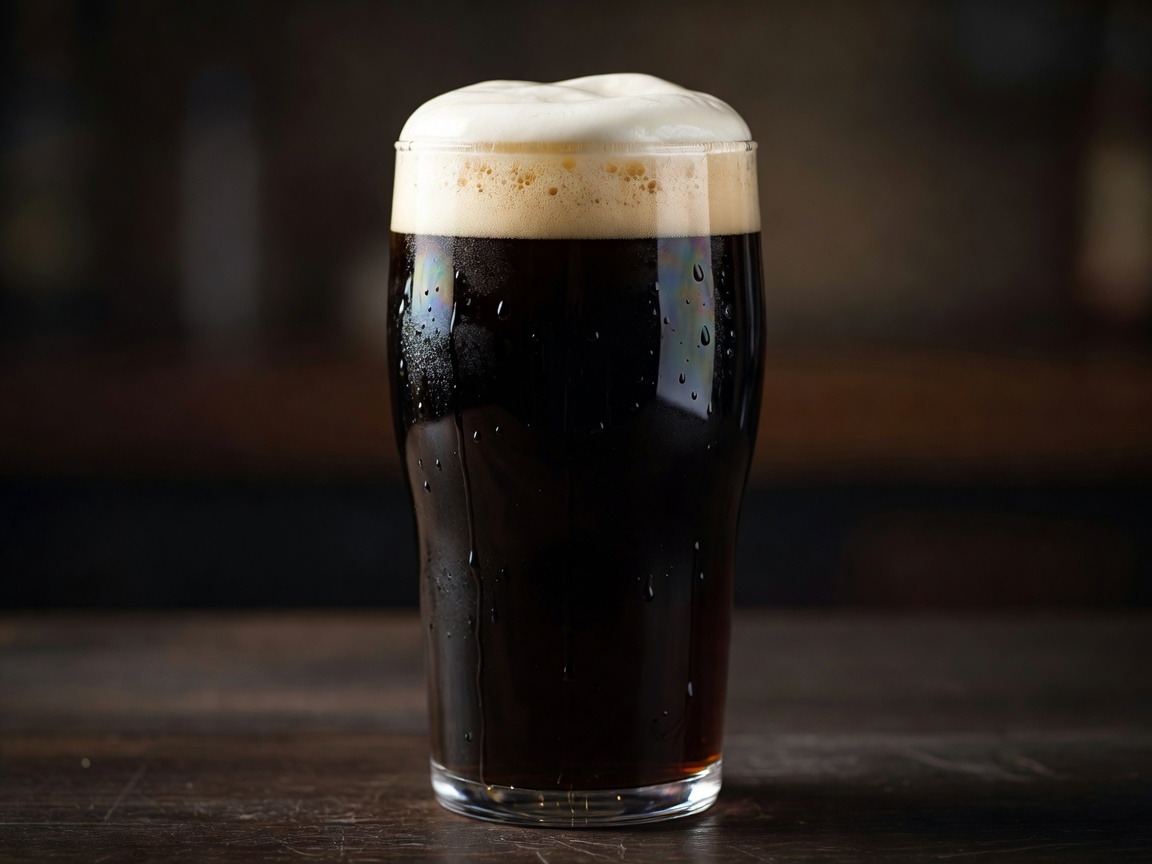
Porter emerged in 18th-century London as a dark, robust beer popular with the city's street and river porters. Stronger versions were sold as "stout porter", eventually shortened to stout. In Dublin, Arthur Guinness signed a famous 9,000-year lease on the St. James's Gate brewery in 1759 and later focused on porter and stout, creating the drink most associated with Ireland today.
Modern Irish dry stout gets its roasty, coffee-like flavour from roasted unmalted barley. Many stouts on draught are served with a nitrogen mix, which creates the famous cascading bubbles and creamy head.
- Dry stout — roasty, relatively light in alcohol (around 4–4.5% ABV).
- Oatmeal stout — silkier body from added oats.
- Imperial stout — strong, rich and intense; historically brewed for export to the Russian imperial court.
India Pale Ale (IPA)
In the 19th century, British brewers shipped heavily hopped pale ales to India. Hops act as a natural preservative, and the beers survived the long sea voyage remarkably well. London's Bow Brewery, run by George Hodgson, was an early supplier, and Burton upon Trent later became famous for the style thanks to its mineral-rich water.
The modern craft beer movement — especially in the United States from the 1980s onwards — reinvented IPA with bold, aromatic American hops. At Europe's craft beer festivals today you'll find:
- English IPA — earthy and balanced, with biscuity malt.
- West Coast IPA — clear, dry and assertively bitter with pine and citrus.
- New England / Hazy IPA — cloudy, juicy and low in perceived bitterness.
- Double IPA — stronger, often 8% ABV or more.
Wheat and sour beers
German Weissbier (or Hefeweizen) uses at least 50% malted wheat and a special yeast that creates banana and clove aromas. Belgian witbier is brewed with orange peel and coriander. Meanwhile, Belgium's lambic beers from the Pajottenland region near Brussels are fermented spontaneously by wild yeast and bacteria, then often blended into gueuze or aged on fruit as kriek (cherry).
Quick comparison
| Style | Family | Typical ABV | Flavour |
|---|---|---|---|
| Pilsner | Lager | 4.4–5.2% | Crisp, floral hops |
| Oktoberfestbier | Lager | 5.8–6.3% | Golden, rounded malt |
| Best bitter | Ale | 3.8–4.6% | Balanced malt and earthy hops |
| Belgian tripel | Ale | 7.5–9.5% | Spicy, fruity, dry |
| Dry stout | Ale | 4.0–4.5% | Roasted, coffee-like |
| West Coast IPA | Ale | 6.0–7.5% | Bitter, citrus, pine |
| Hefeweizen | Ale (wheat) | 4.3–5.6% | Banana, clove, soft |
ABV ranges are approximate and vary between breweries.
Festival tip: Start your day with lighter styles such as Pilsner or golden ale, move on to bitters and amber beers, and save the tripels, stouts and doppelbocks for later — your palate (and your evening) will thank you.